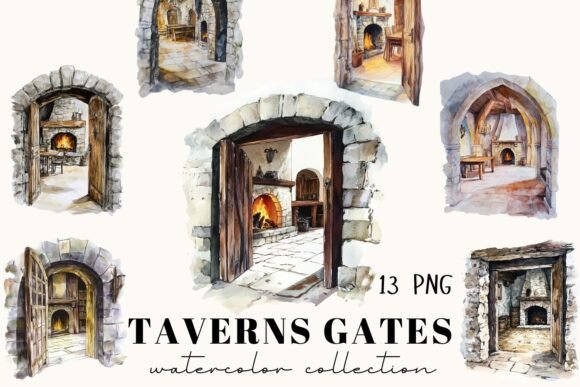
Enchanting Watercolor Taverns Gates for Medieval Design
Imagine a client brief that calls for a sense of history, warmth, and storybook charm—how do you visually capture the essence of a bustling medieval town without resorting to clichés? The answer often lies in the details, specifically in evocative graphic elements like watercolor taverns gates. These illustrated assets do more than just decorate a page; they transport viewers, creating an immediate emotional connection through a blend of artistic texture and nostalgic subject matter. For designers working in branding, editorial layouts, or digital marketing, such a collection offers a unique solution to elevate a project's narrative and visual impact.
Why Watercolor Style Matters in Modern Design
In an era dominated by flat design and minimalist interfaces, the hand-painted aesthetic of watercolor introduces a vital layer of human touch and organic texture. This style breaks through the digital noise, offering a tactile quality that feels authentic and inviting. When applied to a theme like a medieval town, it creates a powerful visual shorthand for tradition, community, and craftsmanship. The soft bleeds, subtle gradients, and imperfect lines inherent in watercolor illustrations contribute to a softer visual hierarchy, guiding the eye without harsh geometric precision. This makes them exceptionally effective for brands aiming to communicate approachability, artisanal quality, or a story-rich identity.
Practical Applications for Creative Professionals
A versatile set of themed illustrations can become a cornerstone of a design workflow. The practical value of a collection like Watercolor Taverns Gates extends across numerous creative projects, each benefiting from the unique aesthetic.
- Branding and Logo Design: Use individual gate or tavern elements as a central mark or supporting icon for a brewery, pub, restaurant, or artisan brand. The style instantly conveys a heritage-focused brand identity.
- Marketing and Social Media Graphics: Create standout promotional materials for events, seasonal campaigns, or storytelling posts. The illustrations serve as captivating focal points in feed layouts, stories, and advertisements, boosting user engagement.
- Editorial and Web Design: Incorporate these assets into magazine layouts, book covers, or website hero sections for travel blogs, historical fiction, or gaming sites. They establish a compelling visual tone and enhance content readability by providing thematic breaks.
- Packaging and Merchandise: Apply the illustrations to product labels, packaging sleeves, or merchandise like posters and apparel. The watercolor texture ensures designs look premium and unique, avoiding a generic, clip-art feel.
- Presentation and UI Design: Use them as thematic backgrounds or section dividers in presentations to maintain audience interest. In UI, they can serve as engaging loading screens, empty-state illustrations, or tutorial graphics for apps with a narrative component.
Integrating Assets Effectively into Your Workflow
Simply having beautiful assets isn't enough; their integration determines the project's success. To maximize the value of a design resource, consider these key factors:
Consistency and Scalability: Ensure the illustrations are provided in a high-resolution, scalable format like PNG with transparent backgrounds. This allows for seamless integration into various compositions without quality loss or awkward borders. Maintain a consistent color palette across your project; let the watercolors guide your secondary and accent hues for a cohesive look.
Visual Hierarchy and Composition: Use these detailed illustrations as focal points. Balance their organic complexity with cleaner typography and ample white space. A sans-serif font often complements hand-drawn imagery by providing clear contrast, improving overall readability and professional presentation.
Audience and Context: Always align the asset's style with your audience's expectations and the project's goals. While perfect for a craft brewery's branding, the same tavern gate might need a different treatment—perhaps as a subtle watermark or pattern—for a corporate finance presentation. Understanding context is key to effective visual communication.
Ultimately, the strength of a design lies in its ability to tell a story and create a connection. Thoughtfully chosen creative assets, like a curated set of watercolor illustrations, are not mere decorations but strategic tools. They infuse projects with personality, enhance brand recall, and transform ordinary layouts into immersive experiences. Investing in quality, thematic assets streamlines the creative process, allowing you to focus on strategy and execution while delivering a visually rich and professional result that resonates deeply with your audience.